3D Laser Scanning
Explora Prima provides 3D Modelling Services Using Laser Scanning Data for 3D Plants as-built, reverse engineering, and heritage building documentation.
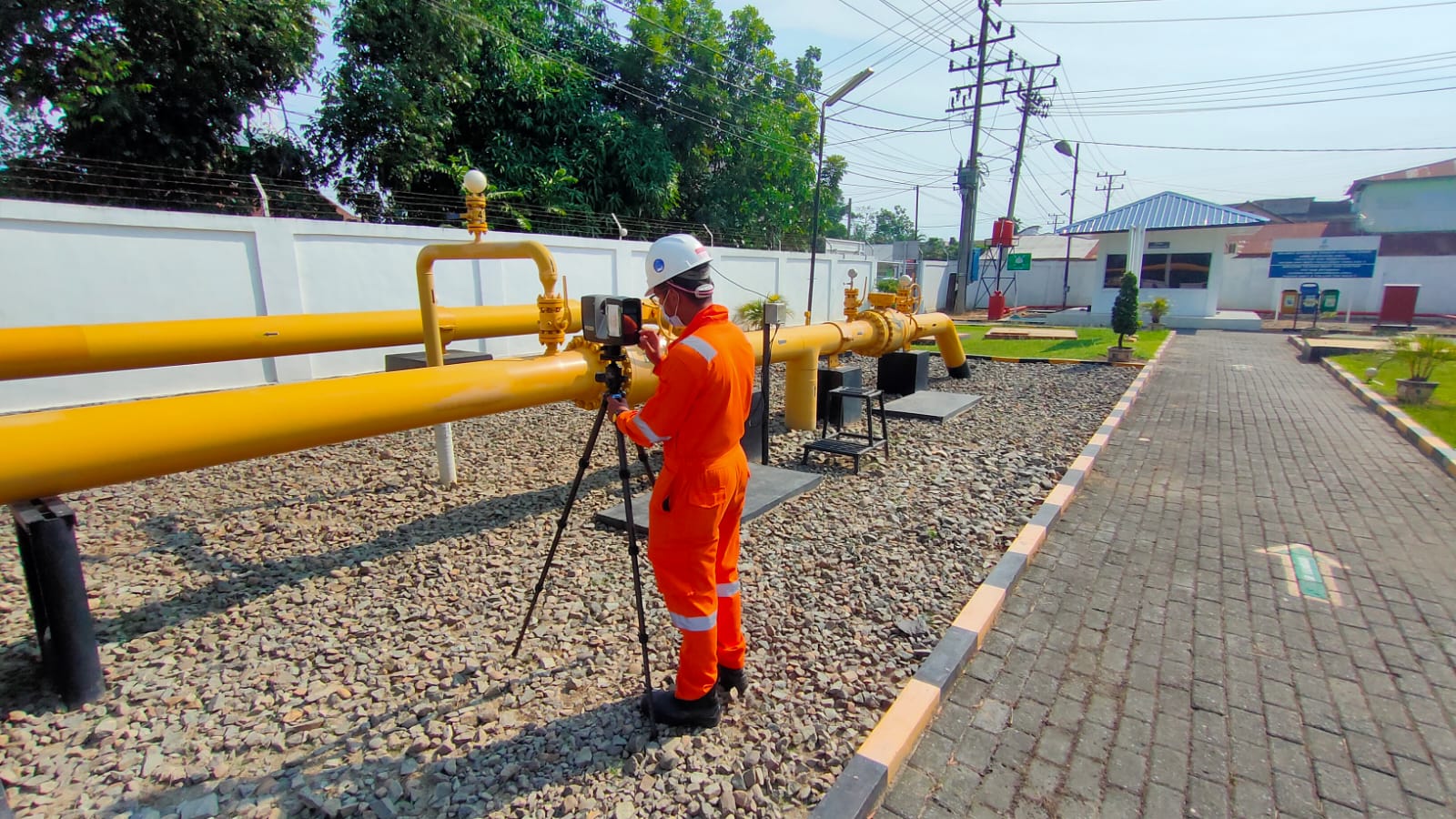
Laser scanning is used in conjunction with conventional dimensional control equipment to capture large 3D data rapidly. Laser scanning systems can capture 3D data at over 1 million points/sec. Completion of the processed data allows EP to generate 3D models representing real-world structures with high accuracy. The scanning result allows us to compare the as-built versus the design to ensure compliance. Dimensional control and laser scanning are widely used in the Ship-Building Industry, Oil and Gas, Construction Industry, Manufacturing, and Architecture.
WHAT DO WE PROVIDE ?
- Explora Prima uses the latest 3D equipment to comply with client and application requirements.
- A dedicated processing facility of 10 personnel qualified in drafting, modelling, QC and PDMS (Plant Design Modelling Systems) administration. Our pool can be extended for long-term projects or large-scale modelling that requires processing work.
- A widely utilised industry standard known software, AutoCAD, Microstation, Cyclone, CadWorx, SCENE, and PDMS. In addition, we continuously develop CAD applications to speed up processing time.
3D LASER SCAN FUNCTIONS IN INDUSTRIES :
- As-Built Documentation: Accurate mapping of existing structures.
- Volumetric Calculation: Precise measurement of volumes for tanks or stockpiles.
- Marine Industries: Support for BWTS (Ballast Water Treatment Systems), propulsion systems, and more.
- Clash Checking & Modification: Identifying interferences before construction or installation.
- Corrosion Mapping: Visualising and measuring surface degradation.
- Engineering Analysis: Including FEA (Finite Element Analysis) and tank settlement.
- 3D Modelling: Creation of “Intelligent Models” with embedded data.


